Published: Oct 3, 2025
Share:



The Waterwheel
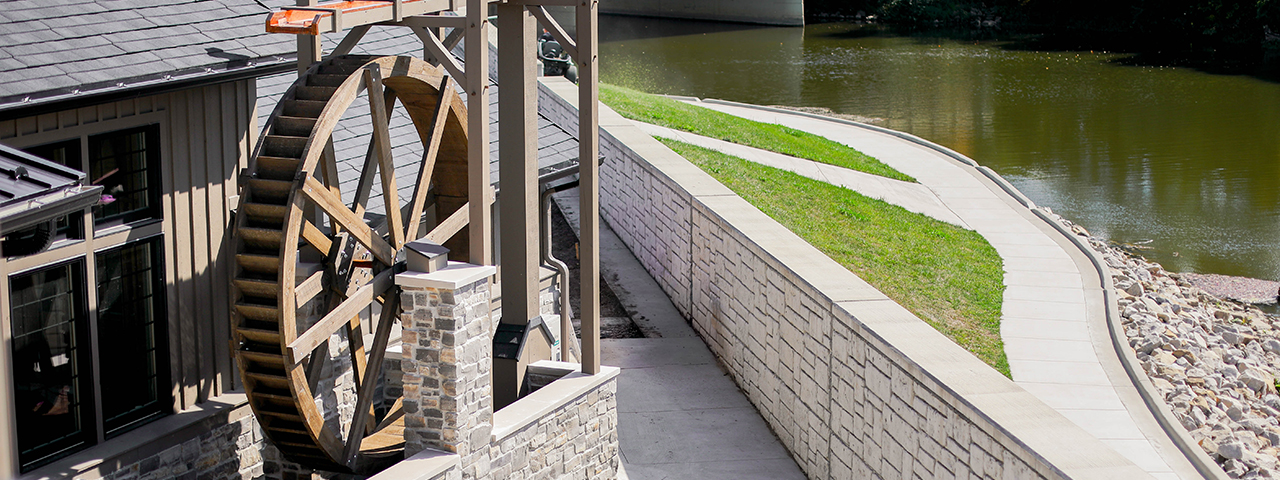
Just three years after Frankenmuth was founded, the Hubinger brothers opened the first milling operation Frankenmuth Milling Co., in 1848, on the banks of the Cass River. Water pouring over the waterwheel, from the river, created the power necessary for turning the grindstones within the mill. Seeing a waterwheel on the exterior of an older building, always near a river or stream, indicated what was going on inside.
Just three years after Frankenmuth was founded, the Hubinger brothers opened the first milling operation Frankenmuth Milling Co., in 1848, on the banks of the Cass River. Water pouring over the waterwheel, from the river, created the power necessary for turning the grindstones within the mill. Seeing a waterwheel on the exterior of an older building, always near a river or stream, indicated what was going on inside.
The original mill continued until 1956 when it was unfortunately demolished. By 1984, a recreation of the original mill with a working waterwheel was opened as the Nickless-Hubinger Mill, on that original site to commemorate Frankenmuth’s agricultural roots.
Zehnder’s of Frankenmuth purchased the mill in 2020 after it had stood vacant for several years. The vision was to develop this historic site as a small boutique hotel paying homage to Frankenmuth and Zehnder’s rich history.
It soon became apparent that the waterwheel installed in 1984 suffered from neglect and could not be salvaged. Does someone still build waterwheels? Our search led us to Sullivan Waterwheels in South Carolina and our new wheel, almost an exact replica, was soon on its way. The new wheel is constructed from durable southern pine, stands 12 feet tall and weighs 1,500 pounds. The new wheel runs on approximately 6-10 gallons of water per minute. We are proud to have this iconic symbol in operation as it did in 1848.
Al Zehnder, Chairman of Zehnder's of Frankenmuth
Related Posts
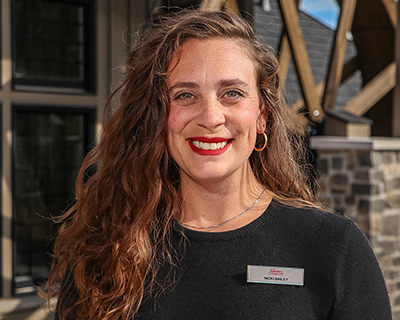
Nikki Bailey Named Assistant Director of Hotel Operations at The Mill
The Mill at Zehnder Park is pleased to announce the appointment of Nicki Bailey as Assistant Director of Hotel Operations for our forthcoming luxury boutique hotel. In her new role, Bailey will oversee daily operations for The Mill at Zehnder Park, reporting to Shelby Albrecht, Director of Hotel and Waterpark operations. Her leadership will help ensure exceptional guest service, housekeeping, culinary quality, group experiences, and front-of-house operations.
Read More >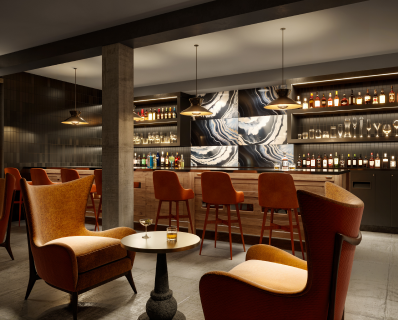
The Landmark Lounge
After standing vacant for years, the historic Nickless-Hubinger Mill is being reimagined once more. The lower level - once the heart of milling operations - will soon open as The Landmark Lounge, a moody, upscale venue honoring the building’s legacy through curated cocktails, small plates, and soft jazz ambiance.
Read More >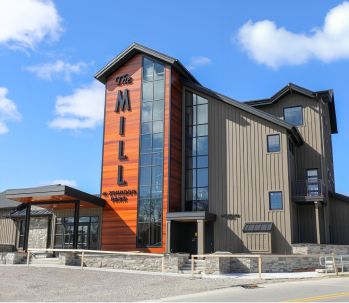
The Transformation – The Mill at Zehnder Park
It all began in 1848 as a milling operation built on the banks of the Cass River by the Hubinger brothers just three years after the founding of Frankenmuth. It operated as a mill where local farmers could bring their grain until it was deemed obsolete at demolished in 1956. An iconic building in the middle of Frankenmuth that was a constant reminder of our agricultural roots was lost forever.
Read More >